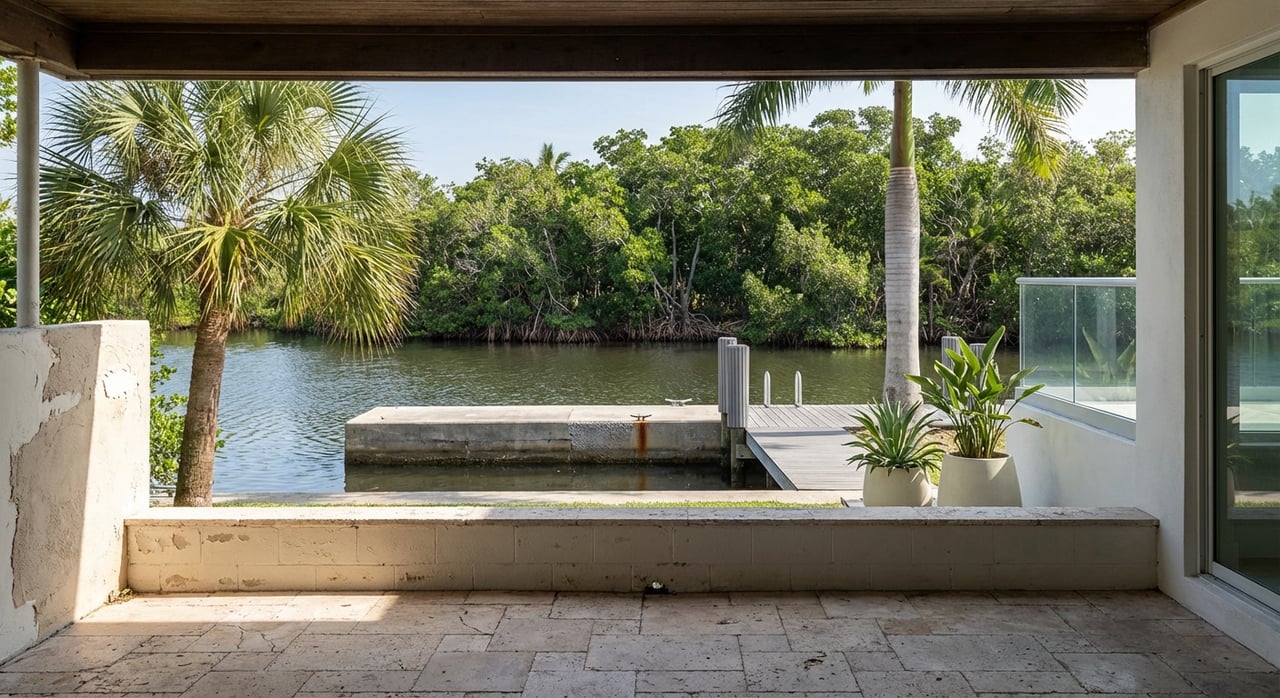
Staring at an older Bird Key home and wondering whether to remodel or start fresh? You are not alone. On Bird Key, the right choice often comes down to flood rules, seawall realities, and the true cost of each path. This guide gives you a clear, local framework to compare renovation and teardown, so you can protect your time, capital, and resale value. Let’s dive in.
Renovation vs teardown at a glance
- Consider renovating when the structure is sound, the seawall is serviceable, your scope is clearly below the NFIP “50% rule,” and you want a shorter timeline with lower carrying costs.
- Consider teardown when the layout cannot meet your needs, foundations or systems are costly to adapt, the lot supports a more marketable footprint, or your renovation cost approaches the 50% threshold that triggers full floodplain compliance.
- Always run both budgets with a 10–20% contingency and include any seawall or dock work.
Rules that shape your options
Bird Key falls under the City of Sarasota and an active HOA. The City’s permitting pages outline required forms and commonly reference an affidavit acknowledging HOA rules. Start by reviewing the City’s building and permit guidance and confirming which applications apply to your scope. You can find the permitting hub on the City site under Building & Permits.
Bird Key is deed‑restricted, so you must also follow the Bird Key Homeowners Association’s declaration and architectural controls. Ask the HOA for current design standards and any recorded amendments before you design. You can reference the association at the Bird Key HOA site.
Floodplain rules are decisive. Pull your parcel’s current flood zone and Base Flood Elevation (BFE) using the City’s flood map information. If planned work equals or exceeds 50% of the structure’s pre‑improvement market value, the NFIP Substantial Improvement rule applies and the home must meet current flood requirements, often including elevation. Read FEMA’s plain‑English summary of the 50% rule and do the math before you sign contracts.
Waterfront realities on Bird Key
Seawalls, docks, and shoreline improvements can add months and significant cost if not scoped early. Waterfront work usually needs City permits plus state and federal review. The Florida Department of Environmental Protection provides guidance on shoreline and mangrove permitting; start with FDEP’s mangrove and shoreline FAQs to understand common triggers.
Federal permits may apply when work affects navigable waters or habitats. The U.S. Army Corps of Engineers publishes regulatory notices and permit conditions for our region; review the Jacksonville District’s regulatory public notices for a sense of timing and requirements. Expect regulators to prefer “within existing footprint” replacements and to steer some sites toward hybrid or living shoreline solutions.
City policy has also been evolving around seawall heights and sea‑level projections. That trend supports resilience, yet it can affect design, cost, and schedule. Build these factors into your plan from day one.
Costs to expect on Bird Key
Every parcel is different, but these ballparks help you frame the conversation:
- Demolition: Many Florida teardowns run about $5–$15 per square foot or $8,000–$30,000+ depending on size, pool removal, access, and disposal. Coastal access can push costs higher. See national context in this demolition overview from Get A Site Plan.
- New construction: Broad Florida ranges often run $150–$350/sf for typical homes, while luxury waterfront custom builds commonly run $400–$800+/sf depending on elevation, envelope, systems, and finishes. Review the statewide ranges summarized by Real Estate Skills.
- Seawalls and shoreline: Replacement or substantial repair can range roughly $200–$800+ per linear foot based on material and site conditions, with professional design and permitting on top. See industry context from Total Seawall Repair.
- Renovations: Cosmetic updates often sit in the tens to low hundreds of thousands. Large structural or system upgrades can reach $150–$400+/sf, especially if you add resilience features or foundation work. National cost‑versus‑value studies show exterior improvements and targeted kitchens or baths often return a larger share of spend than full luxury guts.
Timeline ranges on Bird Key typically look like this: mid‑scope renovations take about 3–12 months, major structural renovations run 6–18 months, and teardown plus custom waterfront new builds often run 12–30+ months depending on permits, seawall work, and finish level.
A 30–60 day decision plan
Use this feasibility sprint before you commit to either path.
Week 0–2: Get the essentials
- Pull your parcel’s flood zone and BFE and request any Elevation Certificate on file using the City’s flood map information.
- Confirm HOA design controls and any recorded restrictions with the Bird Key HOA.
- Open a file with the City’s Building & Permits office to confirm required submittals.
Weeks 2–6: Technical due diligence
- Order a geotechnical report and consult a coastal structural engineer about foundations and any elevation needs.
- Hire a marine contractor to inspect the seawall and dock and to flag likely permits. If a replacement is needed, expect engineered drawings and possible habitat surveys.
- Get a current boundary and shoreline survey.
Weeks 2–4: Run the numbers
- Price two paths with independent contractors: (A) a scoped renovation, and (B) demolition plus new build, including soft costs and any seawall or dock work. Add 10–20% contingency.
- Test the 50% rule using the structure’s pre‑improvement market value. If your renovation approaches or exceeds it, the cost to comply with current flood standards may align more with a new build.
Permit, schedule, and carry
- Ask the City how long permits are taking for your scope. If shoreline work is involved, confirm expected state and federal timelines by reviewing recent USACE regulatory notices.
- Budget full carrying costs for the entire duration, including interest, insurance, taxes, and HOA dues.
Financing choices
- Renovation track: explore renovation mortgages that allow you to wrap purchase plus improvements into one loan if your scope fits program rules.
- Teardown track: plan on a construction‑to‑permanent loan with staged draws and an as‑completed appraisal. Work with a lender experienced in waterfront projects.
Market context and upside
Bird Key is a small, high‑demand island between downtown Sarasota and St. Armands, with many homes built in the 1950s–1970s and a growing share of custom new builds. Median sold prices have been in the multi‑million range in recent snapshots, with prime bayfront properties reaching the several‑million to low‑eight‑figure tier. On Bird Key, land and water access drive a large share of value. That is why a successful teardown plus high‑end new build can create meaningful upside on the right lot, but only when flood compliance, seawall condition, and permitting are handled early and accurately.
Avoid common pitfalls
- Skipping the flood check. Always confirm flood zone, BFE, and the 50% rule implications before you design or bid work.
- Ignoring the seawall. A weak cap, toe scour, or out‑flanking at the property line can become your biggest surprise expense.
- Underestimating foundations. Bird Key’s dredge‑and‑fill history often means piles or elevated slabs for modern codes. Price it early.
- Forgetting access and trees. Narrow lots, staging constraints, and protected trees can add time and cost under City rules.
- Leaving out reassessment. New construction or substantial improvements are reported via permits and typically raise assessed value; plan for that in your pro forma.
Ready to weigh your options?
If you want a clear, numbers‑forward plan tailored to your lot, we are here to help. Our team pairs Bird Key market expertise with renovation and new‑build fluency, so you can compare paths with confidence and move when the timing is right. For a private, no‑pressure consult, reach out to the Salaverri Windsor Group.
FAQs
What is the NFIP 50% rule for Bird Key remodels?
- If the cost of improvements equals or exceeds 50% of the structure’s pre‑improvement market value, floodplain rules treat it as a substantial improvement and current standards apply. Review FEMA’s guidance on the 50% rule.
Do I need permits to repair or replace a seawall?
- Usually yes. City permits are common, and many projects also require state and sometimes federal authorization, especially where mangroves or seagrass are present. See FDEP’s mangrove and shoreline FAQs.
How long does a new waterfront build take on Bird Key?
- Teardown plus a custom waterfront home typically runs 12–30+ months. Seawall or dock permits and custom finishes push timelines to the long end. The City’s Building & Permits office can share current processing times.
Will tearing down change my property taxes?
- Yes, new construction and substantial improvements are reported to the county and typically raise assessed value. For parcel‑specific guidance, contact the Sarasota County Property Appraiser.
Who should I call first to start the process?
- Begin with the Bird Key HOA for design controls, the City’s Building & Permits office for required submittals, a marine contractor for seawall inspection, and a local builder plus geotechnical engineer for early budgets and borings.