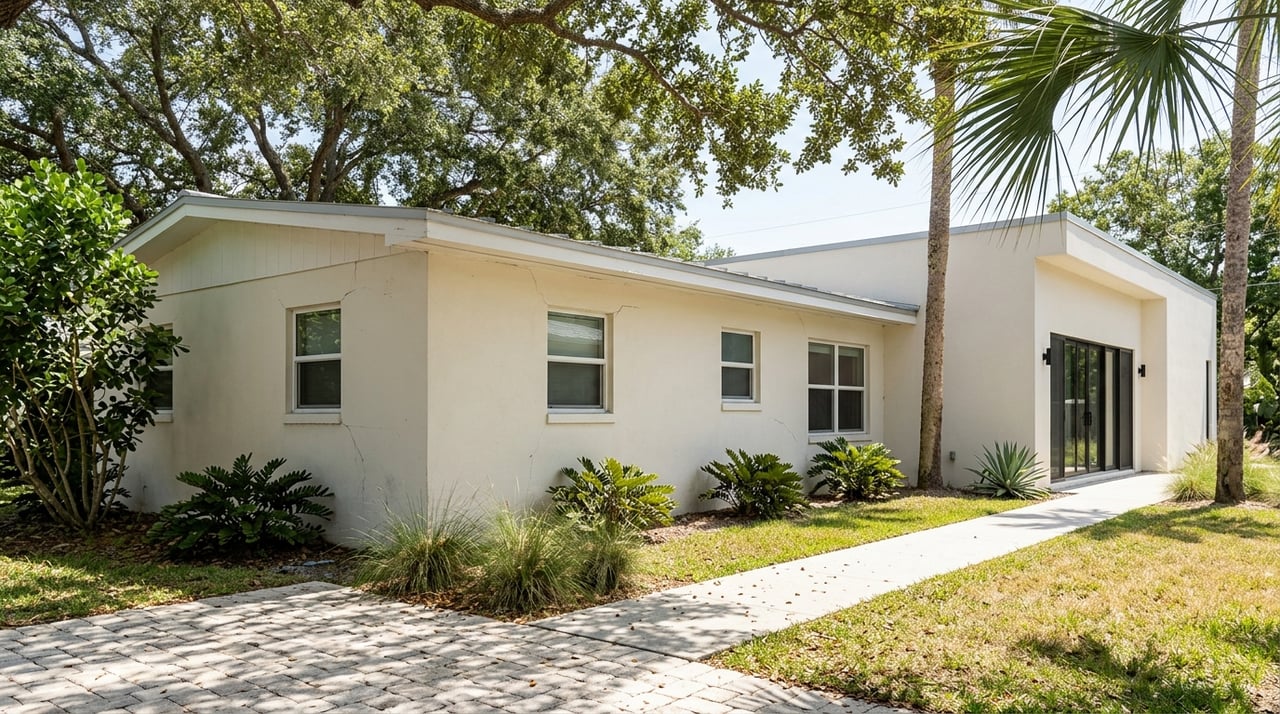
If you are looking at Oyster Bay or Granada and wondering whether renovation upside is real, the short answer is yes, but only when the property itself supports the plan. In Sarasota’s west-of-trail market, buyers often pay a premium for location, yet they are still selective about condition, layout, and finish. That means the right update can create meaningful value, while the wrong scope can overrun the lot or miss what buyers actually want. Let’s dive in.
Why Oyster Bay and Granada stand out
Oyster Bay and Granada both benefit from their place in Sarasota’s west-of-trail market, an area long recognized in local coverage as one of the city’s most sought-after residential settings. That matters in a county where 2024 market value reached $154.34 billion and the average single-family market value was $502,045, according to the Sarasota County Property Appraiser annual report. In a market like this, location carries weight, but buyers still compare quality closely.
There is also steady competition from newer housing stock. The same annual report notes that 4,593 new real-property parcels were added to the tax roll in 2024, and 94% were residential single-family parcels. For you as a buyer, seller, or owner planning upgrades, that means an older home in Oyster Bay or Granada is not just competing with resale homes. It may also be competing with newer construction elsewhere in Sarasota County.
Granada renovation upside
Granada is one of Sarasota’s older west-of-trail neighborhoods, with roots that go back to 1924. Sarasota Magazine describes the area as having Mediterranean Revival, wood-frame vernacular, and Craftsman-style bungalows beneath mature oak canopy. That architectural variety is a big part of the neighborhood’s appeal and a key reason renovation can be so rewarding here.
In practical terms, Granada often offers the strongest upside when you preserve character while improving function. Updated systems, better kitchens and baths, smarter storage, and carefully planned additions tend to fit the neighborhood well. Buyers drawn to Granada are often responding to the feel of the home and the setting together, not just the square footage.
Why lot variation matters in Granada
Not every Granada property offers the same expansion potential. Local coverage has highlighted homes on double lots, which shows that some parcels can support larger upgrades while others may be more constrained. That is why it is important to evaluate each property on its own lot dimensions, setbacks, and layout rather than assuming the whole neighborhood works the same way.
If you are considering adding on, the best first step is checking the Sarasota County Property Appraiser web map and parcel tools. These tools can help you review lot lines, building outlines, parcel dimensions, and zoning layers before you make assumptions about a second story, detached structure, or major footprint expansion.
Historic context can shape the scope
Granada’s charm can also create a more sensitive renovation path. City historic-survey materials identify a Granada District with locally designated historic structures, and Sarasota’s historic-preservation code gives the Historic Preservation Board authority over certificates of appropriateness for designated historic buildings and district properties. You can review that framework in the City of Sarasota historic preservation code.
For you, that means exterior changes, additions, or demolition-sensitive work may require an added layer of review even if zoning might otherwise allow it. This does not eliminate renovation upside. It simply means the best Granada projects are often the ones that respect the home’s architectural story while making it more livable for today.
Oyster Bay renovation upside
Oyster Bay tells a different renovation story. Here, the opportunity is often more site-driven, especially on larger, bay-oriented, or waterfront parcels. Recent Sarasota Magazine coverage of Oyster Bay properties points to homes on Little Sarasota Bay and peninsula settings with water on multiple sides, which speaks to the neighborhood’s potential for ambitious outdoor living, additions, and repositioning when the lot allows.
The area’s broader architectural context also supports that estate-style identity. The National Register nomination for the nearby Field Club and Field Estate describes a Mediterranean Revival estate complex in a low-density residential setting between Sarasota Bay and Tamiami Trail. Today, Oyster Bay continues to support both custom waterfront homes and highly finished luxury properties.
Where Oyster Bay can deliver more upside
In Oyster Bay, larger-scale renovations can make sense when they improve how the home lives on the site. That might mean better indoor-outdoor flow, expanded entertaining space, a stronger connection to the water, or a layout that matches current luxury expectations. The key is making the renovation feel proportionate to the parcel and consistent with neighborhood context.
That does not mean every Oyster Bay home should be expanded aggressively. Even in a neighborhood that can support larger programs, buyers still value design coherence. A well-planned renovation that improves livability often performs better than extra square footage that feels forced.
What really drives renovation ROI
In both neighborhoods, the biggest value drivers are usually the same. Lot quality, usable indoor-outdoor space, floor-plan efficiency, finish level, and how well the home fits the block all matter. Local west-of-trail coverage has also noted that older homes in these areas are often evaluated as either renovation candidates or replacement opportunities, which shapes how buyers compare them.
A useful way to think about it is this: Granada often rewards preservation-minded upgrades, while Oyster Bay may support larger site-based repositioning when the parcel, water orientation, and neighborhood setting justify it. That is not a guarantee of appreciation. It is a practical interpretation of how these neighborhoods are described and how buyers tend to evaluate them.
Countywide data also suggests buyers are paying attention to quality. While taxable value rose 10.27% in 2024, the countywide average market value slipped slightly after the sharp 2022 to 2023 rise, according to the 2024 Sarasota County Property Appraiser annual report. In a more selective environment, thoughtful renovations tend to stand out more than size alone.
Due diligence before you buy or renovate
If you are evaluating a project in Oyster Bay or Granada, parcel-specific due diligence should come first. In Sarasota’s single-family zones, maximum height is generally 35 feet, while minimum lot sizes and setbacks vary by district. You can review those standards in the City of Sarasota zoning code.
Before moving forward, make sure you verify:
- Zoning district
- Setbacks and lot coverage rules
- Building height limits
- Historic status or historic district location
- Plat lines and parcel dimensions
- Whether the planned addition actually fits the site
Ask a better renovation question
Instead of asking, “Can I add square footage?” ask, “How much well-placed square footage can this lot and zoning actually absorb?” That shift matters. In both Oyster Bay and Granada, the strongest renovations usually respect the lot, the trees, and the home’s architectural context while bringing the property up to modern expectations.
That is where local guidance becomes especially valuable. Whether you are buying a project home, preparing a property for resale, or weighing renovation against replacement, having a clear read on parcel constraints and buyer expectations can help you avoid expensive missteps. If you want a tailored strategy for Sarasota’s west-of-trail market, the team at Salaverri Windsor Group can help you assess the opportunity with a concierge-level, detail-driven approach.
FAQs
What makes Granada a strong renovation neighborhood in Sarasota?
- Granada often offers renovation upside through character-preserving improvements, including updated systems, improved kitchens and baths, better storage, and discreet additions that fit the neighborhood’s historic architectural mix.
What makes Oyster Bay different from Granada for renovation projects?
- Oyster Bay is often more site-driven, with some larger, bay-oriented, or waterfront parcels that may support broader indoor-outdoor upgrades or larger-scale repositioning when zoning and lot conditions allow.
How can you check lot and zoning details for Oyster Bay or Granada homes?
- You can start with the Sarasota County Property Appraiser web map to review parcel dimensions, lot lines, building outlines, and zoning layers before planning an addition or major renovation.
Do historic rules affect renovations in Granada, Sarasota?
- Yes. Some Granada properties may fall within local historic designations or districts, which can add review requirements for exterior changes, additions, or demolition-sensitive work under the City of Sarasota’s preservation rules.
What should you review before buying a renovation property in Sarasota?
- You should verify zoning, setbacks, height limits, lot coverage, parcel dimensions, plat lines, and any historic status so you understand what the site can realistically support before committing to a project.