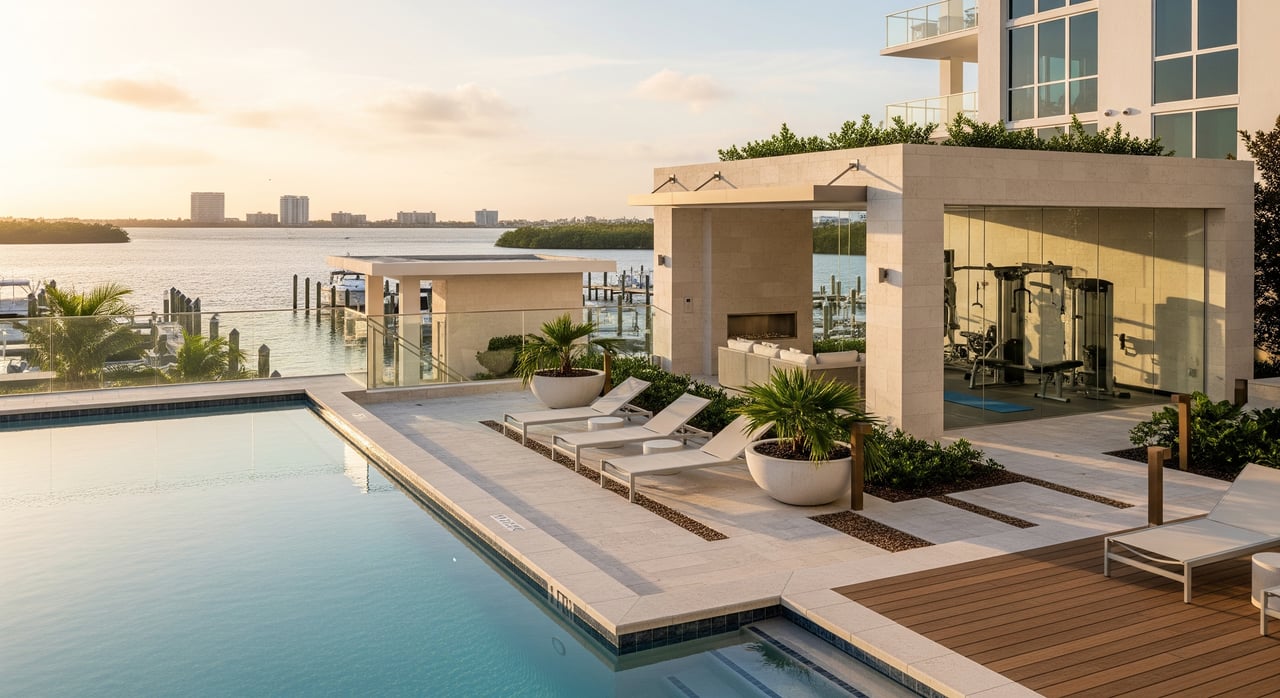
Are you eyeing a sleek Bayfront condo and wondering what those monthly fees actually cover? You are not alone. Understanding how association fees work on the downtown waterfront can help you compare buildings, avoid surprises, and protect your investment. In this guide, you will learn what is typically included, what is not, how Bayfront factors influence costs, and the documents to review before you commit. Let’s dive in.
What condo fees are
Condo fees are recurring payments to your condominium association that fund the operation, maintenance, insurance, and reserves for your building’s shared elements. Fees are set through the association’s annual budget and billed monthly, quarterly, or annually. Florida law, including Chapter 718 of the Florida Statutes, outlines how associations manage budgets, reserves, and assessments.
What Bayfront fees usually include
While every building is different, most Bayfront Sarasota condo fees cover a consistent set of categories. Always verify the exact scope in the association budget and governing documents.
Building and common-area upkeep
Your fees generally fund maintenance of exterior walls, roofs, balconies and railings, corridors, lobbies, elevators, and stairwells. Waterfront exposure often increases the frequency of paint, sealant, and metalwork due to salt and humidity.
Grounds and landscaping
Expect lawn care, irrigation, tree trimming, and pest control for shared outdoor spaces to be included. Waterfront plantings and hardscape often require specialized maintenance.
Shared utilities and services
Common-area electricity and lighting, water and sewer for shared systems, and trash service for common spaces are usually included. Whether your individual unit’s electric, water, or internet is included depends on the building, so confirm what is separately metered.
Building systems and life-safety
Fees typically cover servicing and inspections for elevators, common HVAC, plumbing in shared chases, and fire and life-safety systems such as sprinklers and alarms. These items are essential in high-rise towers and can represent a meaningful share of the annual budget.
Amenities and staffing
Pools, fitness centers, spas, clubrooms, and security systems are common in Bayfront buildings. Full-service towers may also include concierge, doorman, valet, or marina operations. More amenities and staffing usually mean higher operating costs.
Management and administration
The association’s management contract, accounting, legal, insurance brokerage, and staff payroll are typically paid from fees. Well-run buildings budget prudently for professional support.
Insurance for common elements
Most associations carry a master insurance policy for common areas and the structural elements they maintain. This is different from your personal policy and does not usually cover your interior finishes or contents.
Reserve funding
A portion of your fee should be set aside in reserves for future capital work such as roof replacement, elevator modernization, waterproofing, seawall or dock repairs, and building envelope projects. Healthy reserves reduce the risk of special assessments.
What fees usually do not include
Even in full-service buildings, some costs fall to unit owners. Clarity here can save you from surprise expenses later.
- Interior damage, finishes, and personal property. You will need an HO-6 policy for your unit’s interior and belongings.
- Flood insurance for your interior and contents. Associations may carry a master flood policy for structural components, but owners are often responsible for interior coverage, especially in FEMA flood zones.
- Utilities billed to your unit. Electric, water, cable, internet, and phone are often separate unless the budget shows otherwise.
- Unit HVAC maintenance or replacement, unless your documents assign this to the association.
- Mortgage payments, income taxes, or personal expenses.
Bayfront factors that influence fees
Downtown on the water is a premium location, and the setting shapes costs and coverage in a few important ways.
Coastal exposure and storm risk
Salt air and humidity accelerate corrosion on metals and exterior finishes, which can raise annual maintenance. Hurricane season can drive higher wind insurance premiums and larger deductibles. Post-storm repairs and preventive projects such as window upgrades or waterproofing can influence reserves and future assessments.
Flood risk
Many Bayfront properties lie within FEMA-designated flood zones. Lenders may require flood coverage, and the association’s flood policy, if any, may be limited to structural components. You should verify flood zone status, elevation certificates, and the scope of any master flood policy.
Age, construction, and amenities
Bayfront inventory ranges from boutique mid-rise buildings to luxury towers with marina access and concierge. Older buildings may face deferred maintenance or modernization needs, which can increase reserves or trigger special assessments. Full-service amenities tend to carry higher operating costs.
Parking, garage, and marina items
Fees may include maintenance and insurance for parking garages, assigned spaces, seawalls, dredging, and boat slips. In some communities, marina slips are billed separately. Confirm whether parking is deeded or assigned and how related costs are handled.
Insurance and risk details to verify
Insurance is a major cost driver in Florida coastal buildings. Review these items early.
- Master policy scope. Determine if the association policy is “all-in” or “bare walls-in,” and where the boundary lies for interior finishes and mechanicals.
- Deductibles. Ask how wind and hurricane deductibles are applied. Some deductibles are assessed per building or per unit. Understanding the allocation helps you gauge potential out-of-pocket exposure.
- Proof of coverage. Request the association’s insurance declarations or ACORD certificate for both property and flood policies.
- Your HO-6 policy. Make sure you have loss assessment coverage. This protects you if the association levies an assessment for a deductible or uninsured loss.
How fees are set and why they change
Associations prepare an annual budget that sets regular fees. Board procedures and voting requirements are governed by the declaration and Florida law. Fees can rise due to insurance costs, inflation, staffing, planned capital projects, or new reserve requirements. If unexpected expenses arise or reserves fall short, associations may levy a special assessment separate from regular fees.
How fees affect financing and marketability
Your lender will include condo fees in your monthly housing cost when calculating debt-to-income ratios. Some loans require the building to meet project approval guidelines. High fees, thin reserves, or a history of frequent assessments can affect buyer affordability and the perceived strength of the association. Always evaluate the total monthly cost, including the condo fee, your unit insurance, flood coverage if required, and your utilities.
Buyer due diligence checklist
Gather and review these items early in your process. Share them with your lender and insurance agent as needed.
- Current year budget and the most recent budget comparison.
- Financial statements and bank statements for operating and reserve accounts for the last 1 to 3 years.
- The latest reserve study and the schedule of reserve funding.
- Board and membership meeting minutes for the last 12 to 24 months.
- Declaration of condominium, articles, bylaws, and rules to confirm maintenance obligations and fee structure.
- Insurance declarations and summary of master policies, including deductibles and covered perils.
- Estoppel certificate confirming current fee status and pending assessments.
- Disclosures of pending litigation and related documents; search public court records for association matters.
- A list of capital projects completed in the last 5 to 10 years, plus any deferred maintenance.
- Reserve funding history and the schedule of upcoming capital projects with expected funding sources.
Key questions to ask the association
Use these to frame your conversations with management or the board.
- What is the current reserve balance, and how does it compare to the estimated replacement needs?
- Have there been special assessments in the last five years? What were the amounts and reasons?
- Are major capital projects planned or pending, such as roof, facade, elevator, seawall, or structural repairs?
- Are there active insurance claims or litigation that could affect the budget or reserves?
- What are the wind and hurricane deductibles, and how would they be allocated to owners?
- Which utilities or amenities are billed separately to owners, including cable, water, electric, or marina slip fees?
Seller preparation tips
If you are listing a Bayfront condo, proactive transparency helps your sale.
- Assemble the current budget, recent financials, 12 to 24 months of minutes, and the latest reserve study.
- Provide a summary of recent assessments, major completed projects, and upcoming capital needs.
- Share the association’s insurance summary and deductible information.
- Clarify what the monthly fee includes and what is owner responsibility, such as interior maintenance or flood coverage.
- Be ready with an estoppel timeline so buyers and lenders can confirm fee status quickly.
A quick reasonableness check
To judge whether fees feel appropriate, compare what the association provides to similar Bayfront buildings. Look at amenities, staffing, insurance posture, and reserve health in context. A full-service tower with concierge, valet, and marina will not price like a smaller mid-rise with minimal amenities. The goal is not the lowest fee, but a well-funded, well-maintained building that protects value.
Your next step on the Bayfront
A clear picture of what your fees cover helps you choose the right building and plan your total cost with confidence. If you want a tailored breakdown of a specific tower’s budget, reserves, insurance, and approval status, we can help you source the documents and interpret what they mean for your purchase or sale. For private guidance on Bayfront condos, connect with the Salaverri Windsor Group.
FAQs
Do Bayfront condo fees include flood insurance for my unit?
- Typically no. Associations may carry a master flood policy for structural components, but owners are often responsible for interior and contents coverage. Confirm the scope in the insurance summaries.
How do Bayfront condo fees affect my mortgage approval?
- Lenders include the fee in your monthly housing cost and may require the project to meet approval guidelines. Higher fees can reduce affordability for some buyers.
What is a special assessment in a Sarasota condo?
- It is a separate charge the association can levy for unbudgeted expenses or capital projects. Review minutes, budgets, and the estoppel to identify recent or pending assessments.
What documents should I review before buying a Bayfront condo?
- Start with the budget, financials, reserve study, minutes, governing documents, insurance declarations, estoppel certificate, litigation disclosures, and a record of recent capital projects.
What is covered by the association’s master insurance policy?
- It typically covers common areas and structural elements maintained by the association. Interior finishes and personal property are usually the owner’s responsibility, so an HO-6 with loss assessment coverage is important.