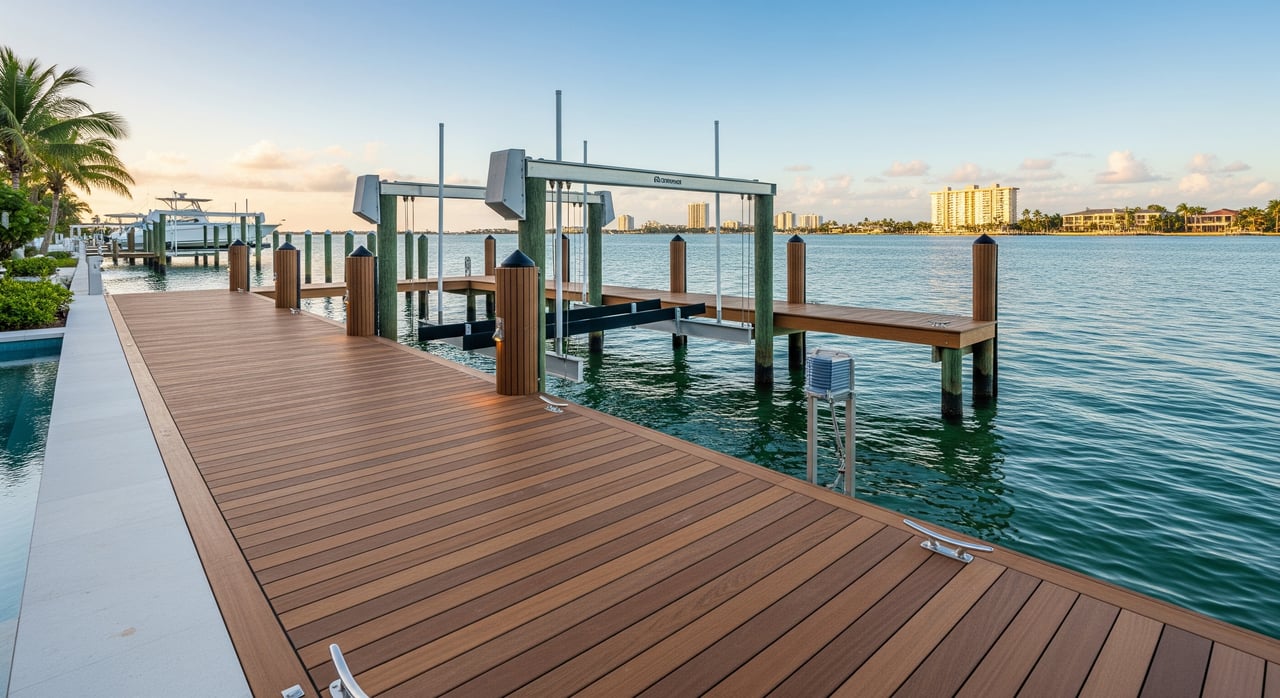
Shopping Bird Key waterfront and feeling unsure about T-heads, pilings, or lift capacity? You are not alone. When a property includes a private dock, the terminology and rules can feel complex, yet they directly affect how you use the home and your boat. In this guide, you will learn the essential dock terms, Bird Key permitting context, and a simple due-diligence plan so you can move forward with clarity and confidence. Let’s dive in.
Why docks matter on Bird Key
A dock is more than a place to tie up. It impacts your boating access, insurance, maintenance costs, and property value. Bird Key sits inside Sarasota Bay, where seagrass protection, manatee considerations, and wake exposure are real factors. The right dock, with proper permits and design, supports your lifestyle and reduces risk.
Dock types: fixed vs floating
Choosing the right type starts with your shoreline, boat, and exposure.
- Fixed (pile-supported) dock: Built on vertical pilings driven into the seabed. A fixed dock stays at one elevation, which can be stable for boarding and in choppy conditions. It must be designed for wind, wave, and uplift loads.
- Floating dock: Built on buoyant floats and connected by a gangway. It rises and falls with the tide, which can help with boarding. It needs proper mooring and freeboard to handle wakes and storm surge.
Bird Key waters see modest tidal range, but local shoaling and wakes matter. In more exposed spots, you may prefer a robust fixed dock with strong fendering. In protected basins, a floating system can be convenient if permitted.
Anatomy of a dock: key parts
Understanding basic components helps you assess condition and fit.
- Pilings: Vertical supports made of treated timber, concrete, steel, or composite. They carry loads and resist waves and wakes.
- T-head or face dock: A crosspiece at the end (T-head) or a long parallel segment (face dock) that lets you tie along the side.
- Finger piers: Narrow walkways that create individual berths.
- Dolphins: Clusters of pilings for mooring or fendering away from the main deck.
- Seawall or bulkhead: The shoreline barrier that protects the property and often anchors the landward end of the dock.
- Gangway: The ramp between shore and dock, especially important for floating systems.
- Freeboard: Height from water to the deck or float. Freeboard affects boarding comfort and how the dock handles wakes.
- Cleats and bollards: Hardware for lines. Their placement and strength matter for safe mooring.
Boat fit: LOA, beam, draft, and depth
Before you fall in love with the view, confirm your boat will actually fit.
- LOA (length overall) and beam: Check that slip width, finger spacing, and T-head length suit your boat’s dimensions.
- Draft: The vertical distance from the waterline to the bottom of the keel. Match draft to the water depth at mean low water where you will berth.
- Depth at berth: Ask for a recent bathymetric survey or sounding. West Florida’s tides are modest, but shoaling can reduce usable depth.
- Approach and maneuvering: Confirm clear access to marked channels and watch for fixed bridges or overhead obstructions.
If a lift is present, verify the lift capacity and cradle dimensions match your boat’s weight, hull shape, and beam. Mismatches are common deal-breakers.
Ownership, rights, and permits
Florida treats the land under most coastal waters as sovereign submerged lands owned by the state. As an upland owner, you have riparian rights that allow reasonable access to the water, yet docks typically need authorization over submerged lands.
On Bird Key, confirm:
- Where the mean high water line sits relative to the dock.
- Whether any part of the dock extends over state-owned submerged lands.
- That required permits and any leases or authorizations are in place and properly closed.
Common approvals include:
- Local permits: City of Sarasota or Sarasota County issues building and shoreline permits. Confirm which jurisdiction applies to the address.
- State authorization: The Florida Department of Environmental Protection reviews docks, lifts, and seagrass impacts, and may issue environmental resource or submerged lands approvals.
- Federal review: The U.S. Army Corps of Engineers regulates structures in navigable waters. Many private docks qualify for general permits; some need individual permits.
- Other reviews: Agencies may weigh in when manatees, sea turtles, or sensitive habitats are affected.
Request copies of all permits, as-built drawings, and closeout documents from the seller. If mitigation was required, confirm if any obligations carry forward to you.
Environmental priorities in Sarasota Bay
Sarasota Bay seagrass beds are ecologically important and protected. Docks can cast shade that damages submerged vegetation. Permitting often addresses:
- Shading limits: Elevated decking or narrower walkways may be required.
- Dock length and alignment: Designs often minimize over-water footprint and avoid sensitive areas.
- Mitigation: In some cases, seagrass transplanting or fees may be required.
Manatee protection also affects lift placement, propeller clearance, and vessel operation. Expect rules that reduce risks to wildlife and maintain safe navigation.
Exposure, wakes, and design choices
Bird Key is inside the bay, yet some shorelines feel wakes from passing boats and wind-driven waves. Design choices that help:
- Pile spacing and diameter sized for local conditions.
- Fendering at corners and along the face to absorb impacts.
- Higher freeboard for areas with frequent wakes.
- Secure mooring using quality cleats and dolphins where needed.
A marine surveyor or experienced dock contractor can advise on whether the current structure matches the wave and wake environment.
Utilities and on-dock safety
Electrical and mechanical systems at the waterline must be correct for safety and longevity.
- Electrical: Outlets near water require GFCI protection. Proper bonding and grounding help prevent shocks and galvanic corrosion.
- Lighting: Install fixtures to reduce glare and avoid confusing navigational cues.
- Water: Hose bibs, if present, should be installed to code and positioned for safe access.
Ask for recent records of electrical work and consider an independent inspection before closing.
Materials, corrosion, and maintenance
Florida’s saltwater environment is tough on materials. Common choices include:
- Decking: Pressure-treated lumber, tropical hardwoods, or composite materials. Composite reduces rot risk but still needs proper fasteners.
- Pilings: Treated timber, concrete, steel, or composite. Hardware should be stainless or hot-dipped galvanized.
- Corrosion control: Sacrificial anodes and non-corrosive fasteners extend service life.
Expect ongoing tasks like replacing worn fenders, servicing lift motors, and tightening fasteners. Ask sellers for maintenance logs and invoices to understand care and cost history.
Storm readiness and insurance
Storm exposure shapes design and insurance decisions.
- Floating docks can ride storm surge if adequately moored.
- Fixed docks must be designed for uplift and lateral loads.
- Boat lifts should be sized and anchored to manufacturer specs and local code.
Insurance for dock structures can differ from your home policy. Confirm coverage for docks and lifts, and ask your carrier about requirements for wind loads, electrical systems, and replacement cost documentation.
Common red flags on resale docks
During inspections, watch for:
- Rotting piles or spalling concrete.
- Loose or corroded fasteners and hardware.
- Failing lift motors, worn cables, or undersized cradles.
- Insufficient freeboard for wake conditions.
- Shading or seagrass violations noted in past permits.
- Gaps in permitting or missing closeout documents.
Identifying these issues early helps you negotiate repairs or plan upgrades with realistic budgets and timelines.
Due diligence: a simple buyer checklist
Use this quick plan to vet any Bird Key dock.
- Property and rights
- Confirm riparian rights in the deed. Identify easements or shared dock agreements.
- Clarify ownership of submerged land under the dock and whether a state lease or authorization applies.
- Permits and records
- Request all permits, authorizations, as-builts, and completion confirmations for the dock, seawall, and lift.
- Ask about any required mitigation and whether obligations transfer to you.
- Inspections and surveys
- Hire a qualified marine surveyor or licensed coastal contractor to inspect piles, framing, connections, fendering, electrical, and lift.
- Obtain a recent sounding or bathymetric survey to verify depth at mean low water at the berth and along the approach.
- Boat fit and operations
- Verify LOA, beam, and draft against slip dimensions and confirmed depths.
- Check for overhead obstructions or bridge clearances on your most frequent route.
- Insurance and costs
- Ask for maintenance logs and past invoices to understand annual upkeep.
- Confirm how your insurance policy treats docks and lifts and any compliance requirements.
- HOA and neighborhood rules
- Review covenants for dock footprint, appearance, allowable boat types, and guest docking rules.
- Confirm any shared maintenance responsibilities for common docks or seawalls.
- Plan changes or upgrades
- If you plan to add a lift or reconfigure a deck, consult the City or County, the Florida Department of Environmental Protection, and the U.S. Army Corps early. Rules change and timelines vary.
Planning upgrades with confidence
If you expect to reconfigure a slip, add a lift, or replace aging materials, start with a professional inspection and a conversation with permitting agencies. Designs often balance your boating needs with seagrass protection and manatee safety. A clear plan helps you avoid surprises and keeps your project aligned with local requirements.
How we can help
You want a Bird Key home that fits your boating life and passes scrutiny. Our team coordinates with trusted marine surveyors, confirms permit records with the proper agencies, and helps you evaluate options for maintenance or upgrades before you close. You get the concierge guidance you expect and the detail you need to proceed with confidence.
If you are considering a Bird Key waterfront home, connect with Salaverri Windsor Group for a private consultation and a clear plan tailored to your goals.
FAQs
What is the difference between fixed and floating docks on Bird Key?
- Fixed docks are pile-supported and remain at one elevation, which suits choppier areas. Floating docks rise and fall with the tide, which aids boarding in protected sites if permitted.
How do I verify a Bird Key dock is properly permitted?
- Request permits, authorizations, as-built drawings, and completion documents from the seller. Confirm jurisdiction with the City of Sarasota or Sarasota County, and check state and federal authorization status.
How can I confirm my boat’s draft is safe at the dock?
- Ask for a recent sounding or bathymetric survey and compare depth at mean low water to your boat’s draft. Verify approach depth and maneuvering room as well.
Can I add a boat lift to an existing Bird Key dock?
- Many lifts require local building permits, state environmental authorization, and often federal notification. Confirm HOA rules, then consult agencies and a qualified dock contractor.
Who owns the underwater land beneath my dock in Sarasota Bay?
- Florida generally holds title to sovereign submerged lands seaward of the mean high water line. Upland owners have riparian rights, yet docks over submerged lands typically need state authorization.
Are manatee and seagrass rules a factor for Bird Key docks?
- Yes. Manatee protection and seagrass preservation influence dock layout, shading, lift placement, and operating practices during permitting.
What electrical safety features should I see on a dock?
- Look for GFCI protection, proper bonding and grounding, and documented electrical work. Consider a marine-qualified inspection before closing.
What are common repair issues on resale docks?
- Rotting piles or decking, corroded fasteners, failing lift motors, insufficient freeboard, and incomplete permits are typical findings that warrant attention.